
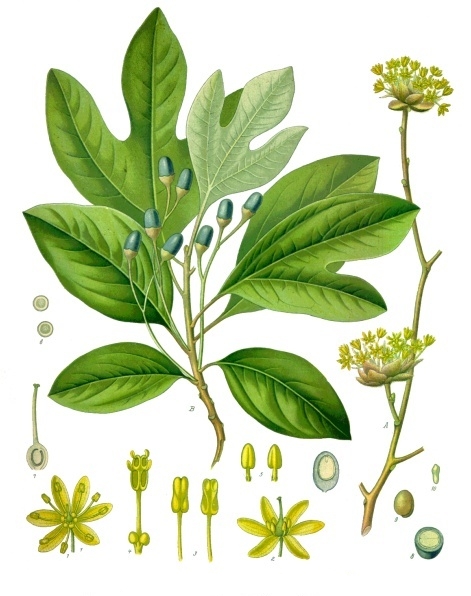
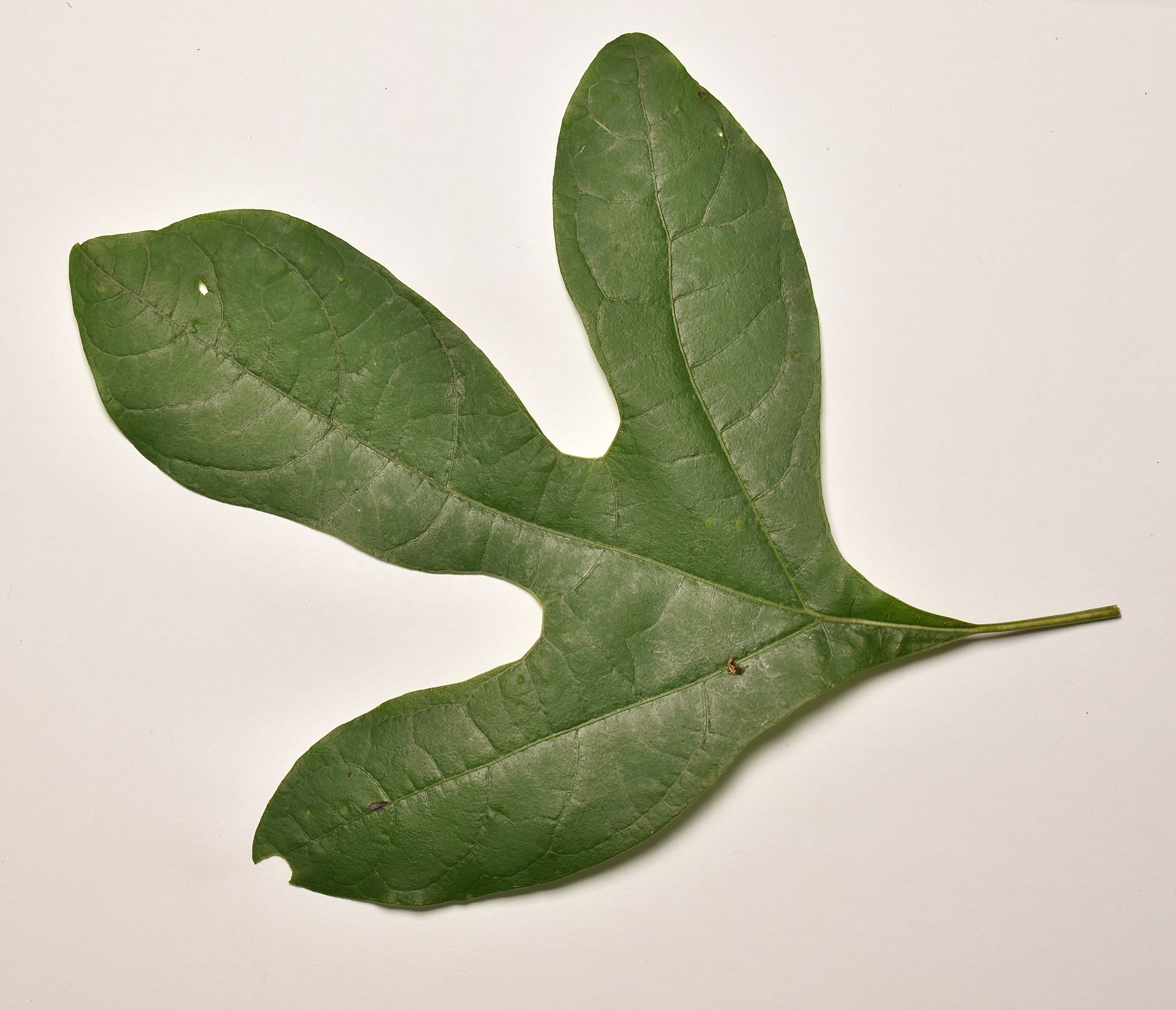
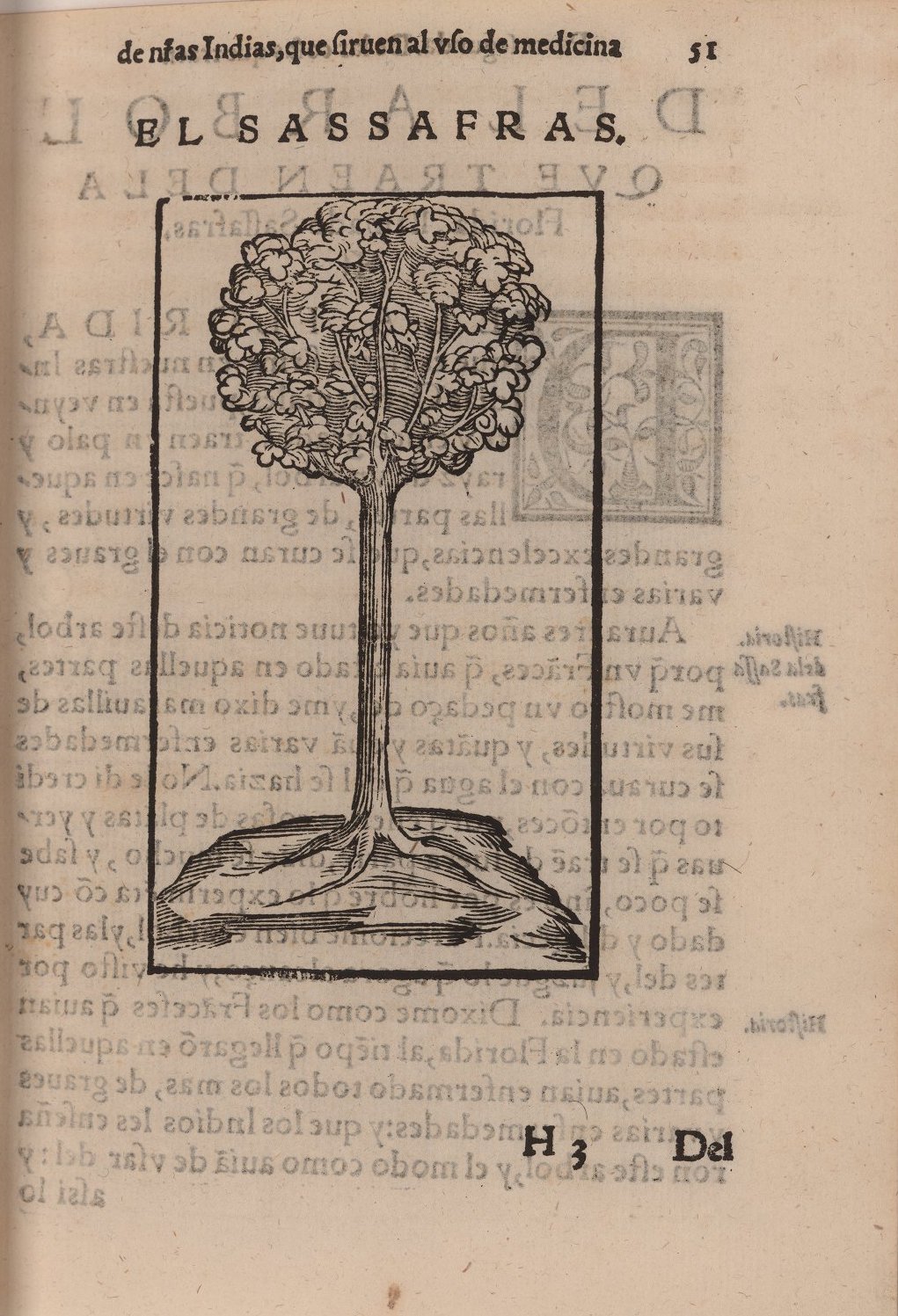
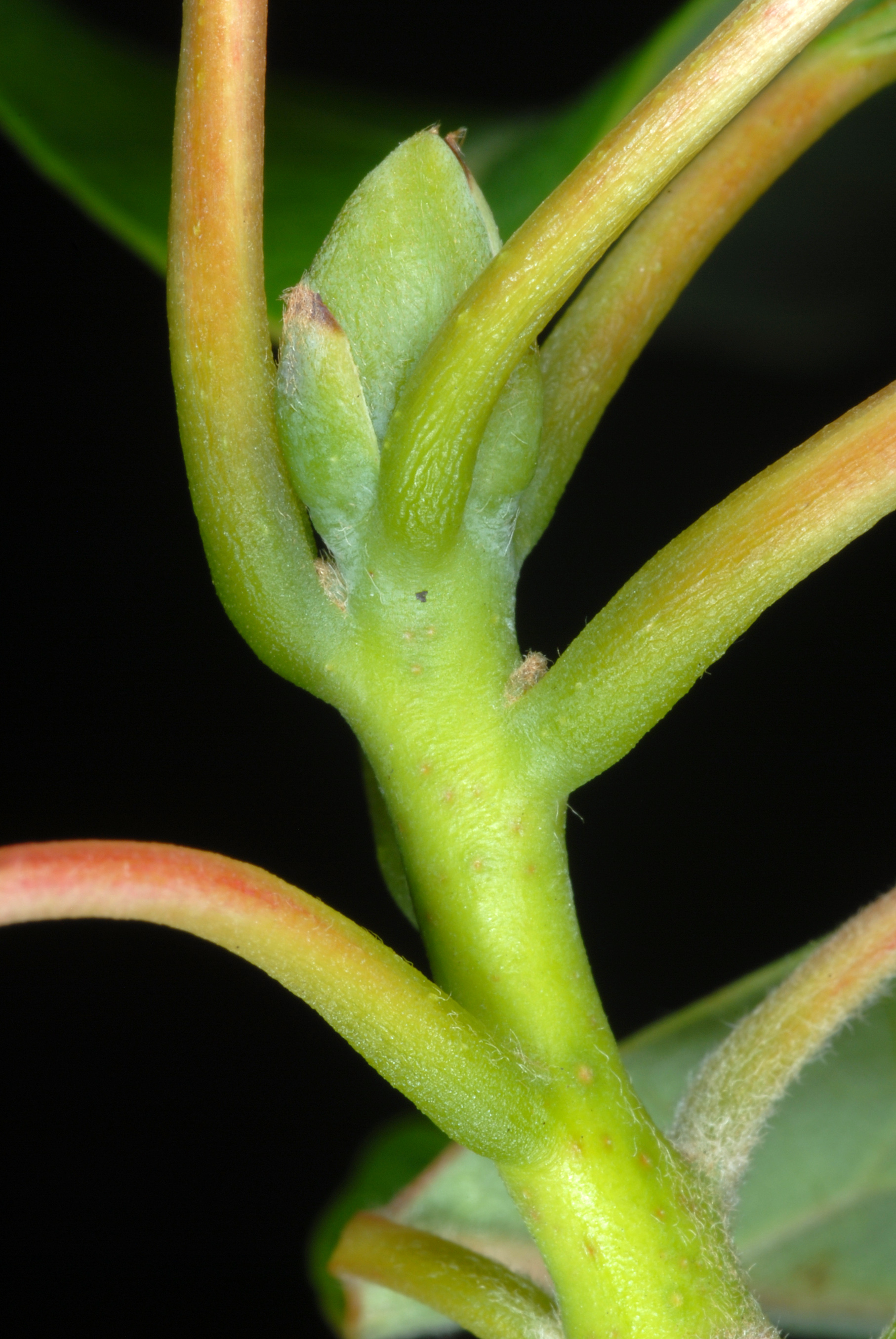
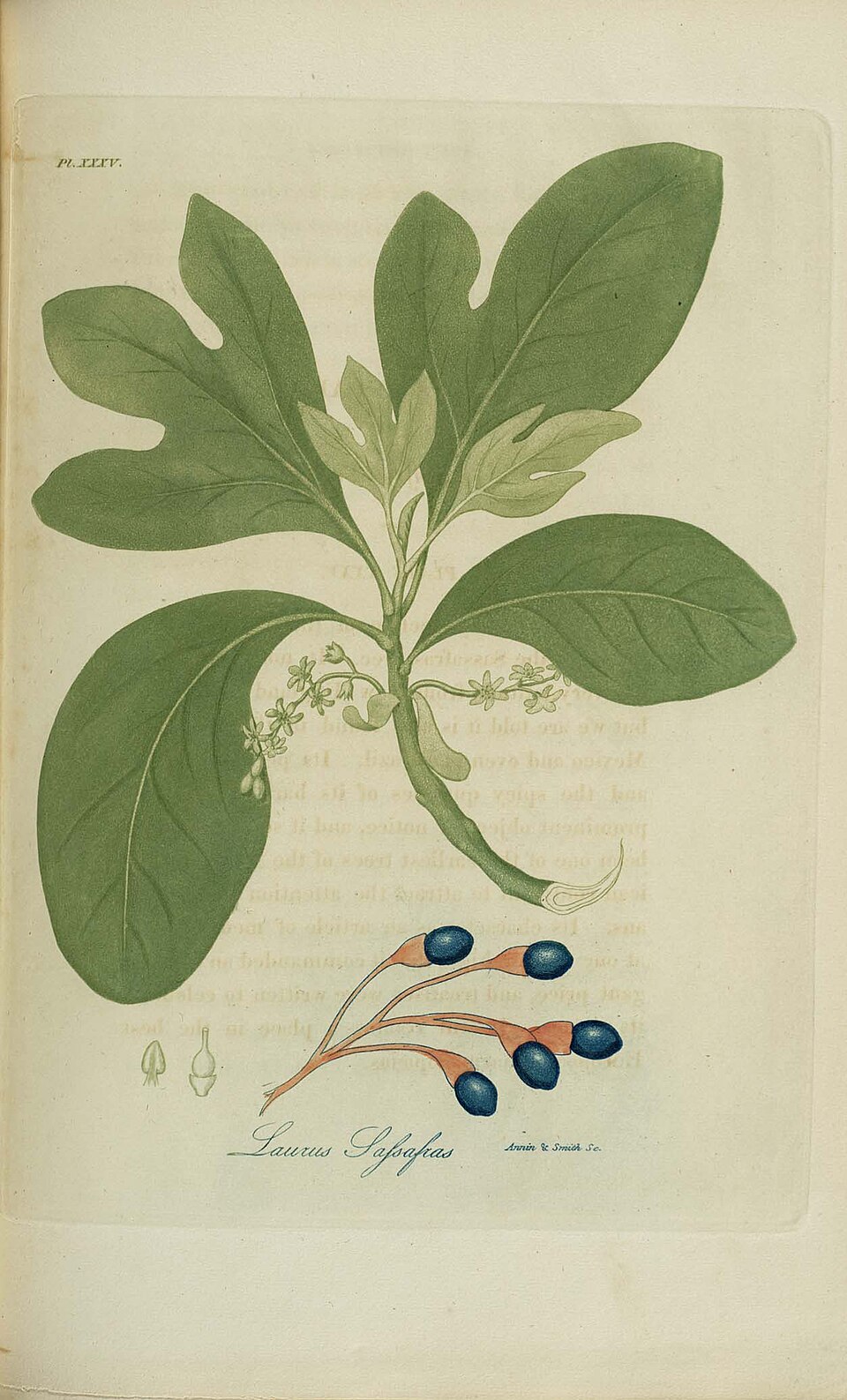
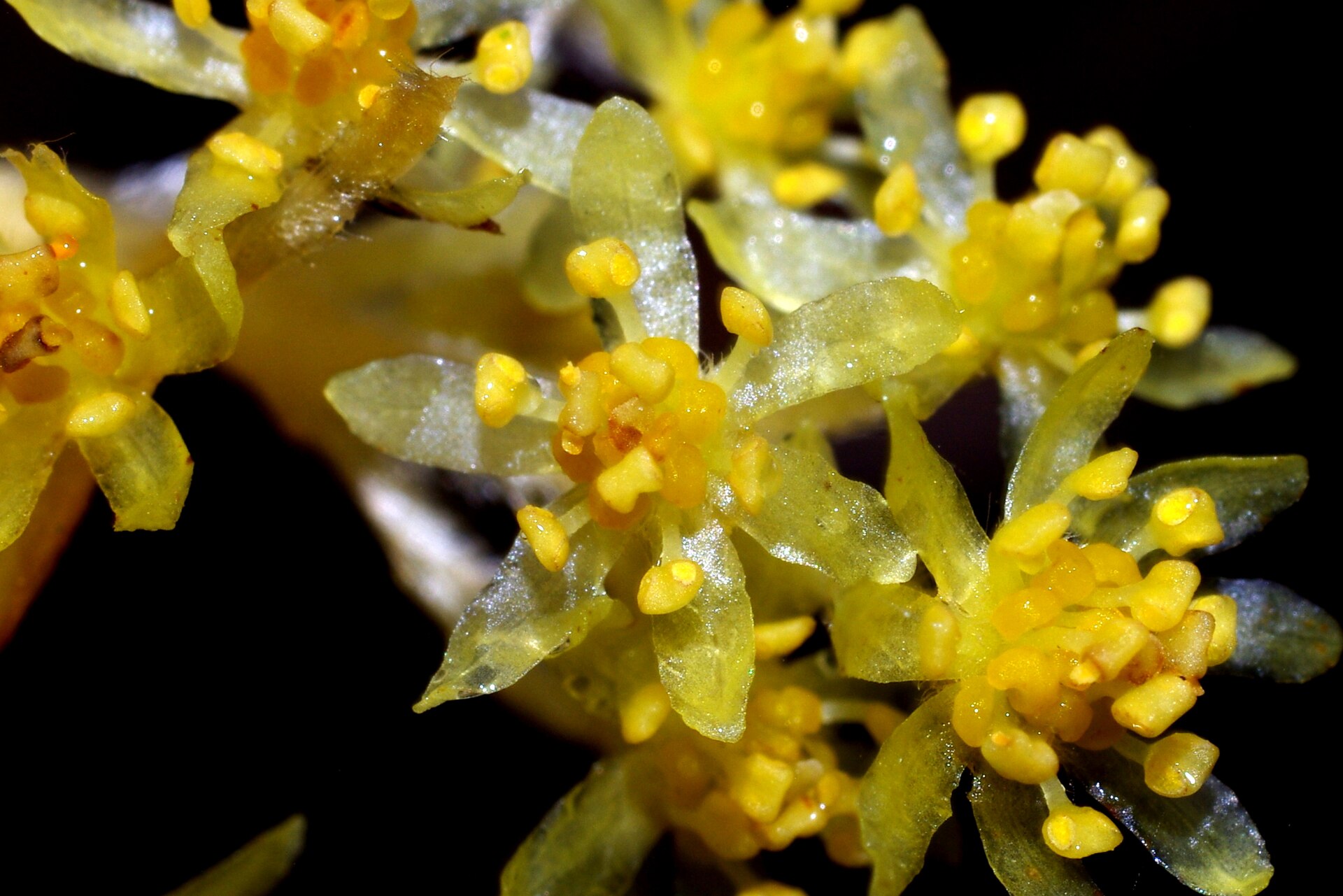
Sassafras, a plant native to Northern America and Eastern Asia, possesses the paradoxical qualities of being massively influential, but generally unknowable. The mystery starts with the etymology of the word 'Sassafras', which has been widely debated. One popular theory locates the word's roots in 'Sasaunckpamuck': the Nipmuck tribe's word for the plant. Others claim Spanish and Latin origins in the word 'saxifrage'. Sassafras was a common ingredient in North American indigenous food and was later lauded as a panacea by European settlers, leading to its widespread extraction and export to Europe. In the 1960s, some studies found that safrole, the oil derived from the plant's root and stem, was carcinogenic. Consequently, the commercial sale and use of sassafras was banned.
Altogether, sassafras has held different identities throughout history, including sustenance, medicine, magic, and poison. Each identity has determined its positionality, ranging from a profitable commodity of colonial trade to an illicit substance. We named ourselves 'Sassafras' because the plant's aspects of movement, multiplicity, marginality, and ambiguity resonate strongly with us and our work. Inspired by the plant's ability to contain multiple perspectives in flux, we view Sassafras as a convergence of perspectives, stories, and ideas, recognising that the most interesting of these are never one-dimensional.